I rarely repost from another website, but think this post from Jim Cecil at nurturemarketing.com is worthwhile. Those of us in business often find that having time to be by ourselves with our thoughts is a rare commodity. AKF
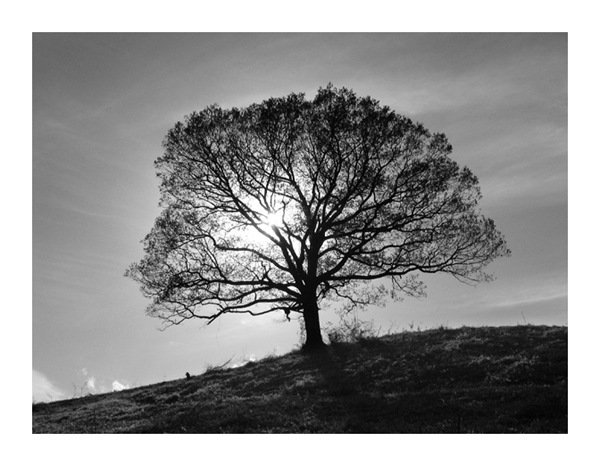
Solitude
- All humans are frightened of their own solitude. But only in solitude can we learn to know ourselves, learn to handle our own eternal aloneness.–Han Suyin
- Be able to be alone. Lose not the advantage of solitude, and the society of thyself.–Thomas Browne
- Being solitary is being alone well: being alone luxuriously immersed in doings of your own choice, aware of the fullness of your won presence rather than of the absence of others. Because solitude is an achievement.–Alice Koller
- Do not rely completely on any other human being, however dear. We meet all life’s greatest tests alone.–Agnes Macphail
- Each of us is alone in the world. It takes great courage to meet the full force of your aloneness. … When you face your aloneness, something begins to happen. Gradually, the sense of bleakness changes into a sense of true belonging. This is a slow and open-ended transition but it is utterly vital in order to come into rhythm with your own individuality. –John O’Donohue (Eternal Echoes: Celtic Reflections on Our Yearning to Belong)
- I feel the same way about solitude as some people feel about the blessing of the church. It’s the light of grace for me. I never close my door behind me without the awareness that I am carrying out an act of mercy toward myself.–Peter Hoeg (Smilla’s Sense of Snow)
- I learned…that inspiration does not come like a bolt, nor is it kinetic, energetic striving, but it comes into us slowly and quietly and all the time, though we must regularly and every day give it a little chance to start flowing, prime it with a little solitude and idleness.–Brenda Ueland
- I live in that solitude which is painful in youth, but delicious in the years of maturity.–Albert Einstein
- I never found a companion that was so companionable as solitude.–Henry David Thoreau
- Inside myself is a place where I live all alone and that’s where you renew your springs that never dry up.–Pearl S. Buck
- Isolation is aloneness that feels forced upon you, like a punishment. Solitude is aloneness you choose and embrace. I think great things can come out of solitude, out of going to a place where all is quiet except the beating of your heart.–Jeanne Marie Laskas
- It is not necessary that you leave the house. Remain at your table and listen. Do not even listen, only wait. Do not even wait, be wholly still and alone. The world will present itself to you for its unmasking . . . in ecstasy it will writhe at your feet.–Franz Kafka
- It is well to be alone. It fertilizes the creative impulse.–Max Nordau
- Language has created the word “loneliness” to express the pain of being alone, and the word “solitude” to express the glory of being alone.–Paul Johannes Tillich
- Leisure is a form of silence, not noiselessness. It is the silence of contemplation such as occurs when we let our minds rest on a rosebud, a child at play, a Divine mystery, or a waterfall.–Bishop Fulton J. Sheen
- Like water which can clearly mirror the sky and the trees only so long as its surface is undisturbed, the mind can only reflect the true image of the Self when it is tranquil and wholly relaxed.–Indra Devi
- Man cannot survive without air, water and sleep. Next in importance comes food. And close on its heels, solitude.–Thomas Szasz
- One must learn an inner solitude, where or with whomsoever he may be. He must learn to penetrate things and find God there, to get a strong impression of God firmly fixed on his mind.–Meister Eckhart
- Only in quiet waters do thing mirror themselves undistorted. Only in a quiet mind is adequate perception of the world.–Hans Margolius
- Only when one is connected to one’s own core is one connected to others I am beginning to discover. And, for me, the core, the inner spring, can best be refound through solitude.–Anne Morrow Lindbergh (Gift from the Sea)
- The person who has not learned to be happy and content while completely alone for an hour a day, or a week has missed life’s greatest serenity.–H. Clay Tate (Building a Better Home Town)
- Solitude can be frightening because it invites us to meet a stranger we think we may not want to know–ourselves.–Melvyn Kinder
- Solitude can be used well by very few people. They who do must have a knowledge of the world to see the foolishness of it, and enough virtue to despise all the vanity.–Abraham Cowley
- Solitude gives birth to the original in us.–Thomas Mann
- Solitude is as needful to the imagination as society is wholesome for the character.–James Russell Lowell
- …solitude is such a potential thing. We hear voices in solitude, we never hear in the hurry and turmoil of life; we receive counsels and comforts, we get under no other condition…–Amelia Barr
- Solitude is the salt of personhood. It brings out the authentic flavor of every experience.–May Sarton
- Solitude, though it may be silent as light, is like light, the mightiest of agencies; for solitude is essential to man. All men come into this world alone; all leave it alone.–Thomas De Quincey
- There are days when solitude is a heady wine that intoxicates you with freedom, others when it is a bitter tonic, and still others when it is a poison that makes you beat your head against the wall.–Sidonie Gabrielle Colette (Earthly Paradise)
- To sit alone in the lamplight with a book spread out before you, and hold intimate converse with men of unseen generations–such is a pleasure beyond compare.–Kenko Yoshida
- Solitude, if rightly used, becomes not only a privilege but a necessity. Only a superficial soul fears to fraternize with itself.–Alice H. Rice
- Solitude is a necessary protest to the incursions and the false alarms of society’s hysteria, a period of cure and recovery.–Abraham Joshua Heschel
- Solitude is strength; to depend on the presence of the crowd is weakness. The man who needs a mob to nerve him is much more alone than he imagines.–Paul Brunton
- Solitude is the human condition in which I keep myself company. Loneliness comes about when I am alone without being able to split up into the two-in-one, without being able to keep myself company.–Hannah Arendt
- Solitude is the place of purification.–Martin Buber (I and Thou, 3)
- Talents are best nurtured in solitude: character is best formed in the stormy billows of the world.–Goethe
- There is a solitude which each and every one of us has always carried within. More inaccessible than the ice cold mountains, more profound than the midnight sea: the solitude of self.–Elizabeth Cady Stanton
- True silence is the rest of the mind, and is to the spirit what sleep is to the body, nourishment and refreshment.–William Penn
- We need society, and we need solitude also, as we need summer and winter, day and night, exercise and rest.–Philip Gilbert Hamerton (The Intellectual Life)
- We need to find God, and he cannot be found in noise and restlessness. God is the friend of silence. See how nature–trees, flowers, grass–grows in silence; see the stars, the moon and the sun, how they move in silence…we need silence to be able to touch souls.–Mother Teresa
- What a commentary on our civilization when being alone is considered suspect, when one has to apologize for it, make excuses, hide the fact that one practices it-like a secret vice!–Anne Morrow Lindbergh
- What a lovely surprise to discover how unlonely being alone can be.–Ellen Burstyn
- When we are alone on a starlit night, when by chance we see the migrating birds in autumn descending on a grove of junipers to rest and eat; when we see children in a moment when they are really children, when we know love in our own hearts; or when, like the Japanese poet, Basho, we hear an old frog land in a quiet pond with a solitary splash–at such times the awakening, the turning inside out of all values, the “newness”, the emptiness and the purity of vision that make themselves evident, all these provide a glimpse of the cosmic dance.–Thomas Merton
- When we cannot bear to be alone, it means we do not properly value the only companion we will have from birth to death–ourselves.–Eda LeShan
- Women need real moments of solitude and self-reflection to balance out how much of ourselves we give away.–Barbara De Angelis
- You cannot be lonely if you like the person you’re alone with.–Wayne Dyer